
Government Contractor IT
Remote-first technical readiness support for Southern California government contractors, including CUI scoping, SSP and POA&M documentation, evidence organization, and scoped on-site work where included in the engagement.
Quick answer: Sonic Systems helps Southern California defense contractors and subcontractors prepare for CMMC, applicable NIST SP 800-171 requirements, DFARS clauses, and CUI handling expectations. Support includes readiness assessment, gap remediation, SSP and POA&M work, evidence collection, secure cloud planning, and ongoing IT operations. Sonic Systems supports readiness and technical controls; required status and assessment type come from the solicitation, contract, or flowdown.
Compliance & GRC Platforms We Support
A few of the popular compliance platforms we work with, among many others.





CMMC and NIST SP 800-171: What Defense Contractors Need to Know
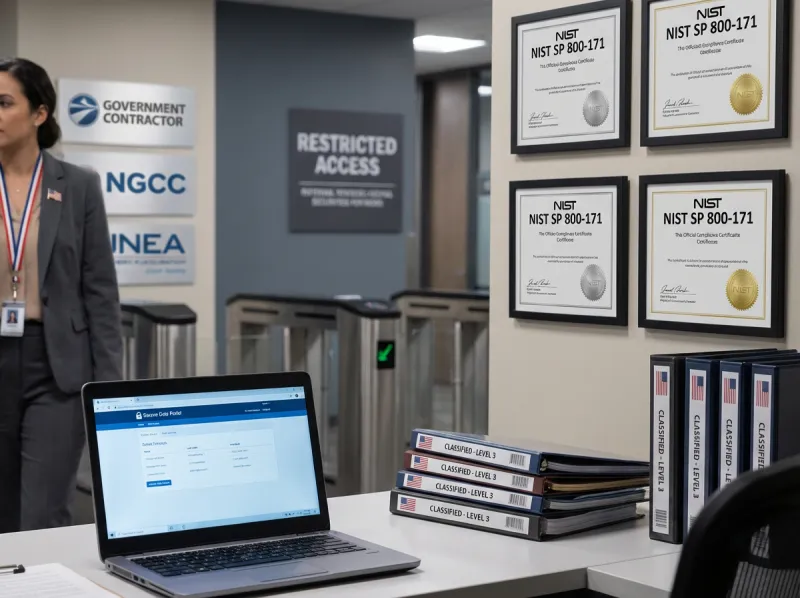
CMMC requirements enter the buying process through solicitations, contracts, task orders, and subcontract flowdowns. The required CMMC level and assessment type can vary, so contractors should start with the exact language that applies to their work instead of planning from a generic deadline. The first questions are whether Federal Contract Information (FCI) or Controlled Unclassified Information (CUI) is in scope, which systems process or protect it, and which current status or assessment the contracting party requires.
NIST SP 800-171 requirements, DFARS clauses, System Security Plans, POA&Ms, and SPRS records are related but distinct parts of readiness. The applicable revision and assessment method depend on the governing contract and CMMC path. A defensible program connects every requirement to a real control, responsible owner, current evidence, and documented gap. Contractors should confirm legal and contractual interpretation with their contracting officer, prime contractor, assessor, or qualified counsel.
Sonic Systems works with Southern California defense contractors and subcontractors on the IT implementation side of readiness. We help scope CUI data flows, assess technical gaps, prioritize remediation, build SSP and POA&M documentation that reflects the actual environment, organize evidence, and plan Microsoft government cloud options where the contract and data scope justify them. This work supports readiness, but it does not replace an authorized assessment or a contracting party's determination of what applies.
Who This Is For
- Defense subcontractors handling Controlled Unclassified Information (CUI) for prime contractors or the DoD.
- DoD supply chain companies preparing for CMMC requirements tied to solicitations, contracts, or subcontract flowdowns.
- Aerospace and defense manufacturers subject to DFARS 252.204-7012 and ITAR requirements.
- Professional services firms with federal contracts handling sensitive government data.
- Small businesses pursuing their first government contract and navigating compliance for the first time.
Common IT Challenges in This Industry
- CMMC readiness confusion, including which level applies, what assessment type may be required, and how contract language affects timing.
- Applicable NIST SP 800-171 requirements feel overwhelming without a structured gap analysis and remediation roadmap.
- CUI scoping is unclear, many contractors don't know exactly which data qualifies as CUI or where it flows through their systems.
- SPRS score requirements: contractors must self-attest a score in the Supplier Performance Risk System, but most don't know how to calculate or document it.
- For small businesses, implementing technical requirements and maintaining a System Security Plan can feel like an enterprise burden.
- Finding an IT partner that can map technical work to the CMMC, NIST SP 800-171, and DFARS requirements confirmed for the engagement.
What Government Contractors Should Confirm First
Before buying tools or scheduling an assessment, contractors need a clear view of contract clauses, CUI scope, current controls, evidence gaps, and who owns remediation.
Contract and flowdown language
Review prime contractor requirements, DFARS clauses, CMMC references, and whether FCI or CUI is in scope.
CUI data flow
Map where controlled data enters, where it is stored, which systems process it, and which users or vendors can access it.
SSP and POA&M quality
A System Security Plan should describe real controls, while POA&M items should be owned, prioritized, and actively tracked.
Cloud and identity architecture
Confirm Microsoft 365, GCC or GCC High needs, MFA, conditional access, logging, backup, and endpoint controls before migration or remediation work starts.
Related readiness resources
Framework mapping, control implementation, documentation, and evidence support.
Cybersecurity servicesEndpoint, identity, email, and response controls that support contractor readiness.
Cloud solutionsMicrosoft 365, Azure, private cloud, and regulated-workload planning.
Compliance readiness guideA practical approach to controls, evidence, owners, and recurring review.
San Bernardino County ITRegional support context for Inland Empire and High Desert contractor teams.
How Government Contractor Readiness Work Proceeds
Remote-first technical readiness support, with on-site work only where it is included in the agreed location and engagement scope. Technical work should follow the applicable solicitation, contract, task order, or subcontract flowdown. The engagement does not begin by assuming a CMMC level or cloud platform.
Confirm the requirement
Collect the governing clauses, prime-contractor instructions, data markings, assessment expectations, contract dates, and stakeholder interpretations.
Map the CUI boundary
Document data entry, storage, processing, transmission, users, endpoints, cloud services, external providers, and protection dependencies.
Assess and remediate
Compare real controls and evidence with the applicable requirements, assign gaps, sequence technical work, and maintain an accurate POA&M where permitted.
Validate the record
Update the SSP, organize evidence, review the SPRS assessment record where applicable, and prepare the environment for the assessment path the contract requires.
The assessment identifies technical gaps and evidence needs. It does not determine CMMC compliance, certify a posture, guarantee audit acceptance, or replace a contracting party, assessor, counsel, or other qualified stakeholder.
What Sonic Systems Delivers for Government Contractor
- CMMC readiness assessment that maps your current environment against the requirements identified in your contract or flowdown.
- NIST SP 800-171 gap analysis and remediation planning for the requirements applicable to your environment.
- CUI scoping and data-flow mapping based on the contract, markings, and stakeholder guidance, including where in-scope data is stored, processed, transmitted, or protected.
- SPRS score preparation and documentation to support accurate self-attestation in the Supplier Performance Risk System.
- System Security Plan (SSP) development, the foundational document that describes your environment, controls, and how you protect CUI.
- Plan of Action & Milestones (POA&M) development, structured remediation tracking for the gaps and owners confirmed in scope.
- Regulated cloud architecture planning using Microsoft GCC or GCC High where the contract, data type, and control requirements justify it.
- Ongoing monitoring and evidence collection for the technical responsibilities assigned in the agreed scope, with on-site work only where it is included in the agreed location and engagement scope.
Planning Goals
- Readiness documentation organized around the assessment path identified in the applicable contract requirements.
- A documented basis for the organization to review its SPRS self-assessment with the appropriate stakeholder.
- An SSP that describes the in-scope environment and the technical work documented for it.
- Clearer technical gaps, owners, evidence, and remediation priorities for the organization to review with its contracting stakeholders.
- A repeatable process for reviewing the assigned controls, evidence, and open remediation work.
Frequently Asked Questions
Common questions about IT support for Government Contractor businesses.
How We Help Government Contractor Businesses
The core services we combine to support your industry, security, continuity, and reliable day-to-day IT.
Compliance & Regulatory IT
Navigate HIPAA, CMMC, NIST 800-171, PCI DSS, and other compliance frameworks with practical IT controls and documentation.
Cybersecurity
Managed cybersecurity services with EDR, Microsoft 365 protection, phishing defense, and response planning.
Cloud Solutions
Microsoft 365, Azure, and planned cloud migration services.
IT Infrastructure
Network design, server management, and hardware solutions built for reliability.